The Hour of the Wolf and the Typewriter: How America's Dead Nights Gave Birth to Its Best Sentences
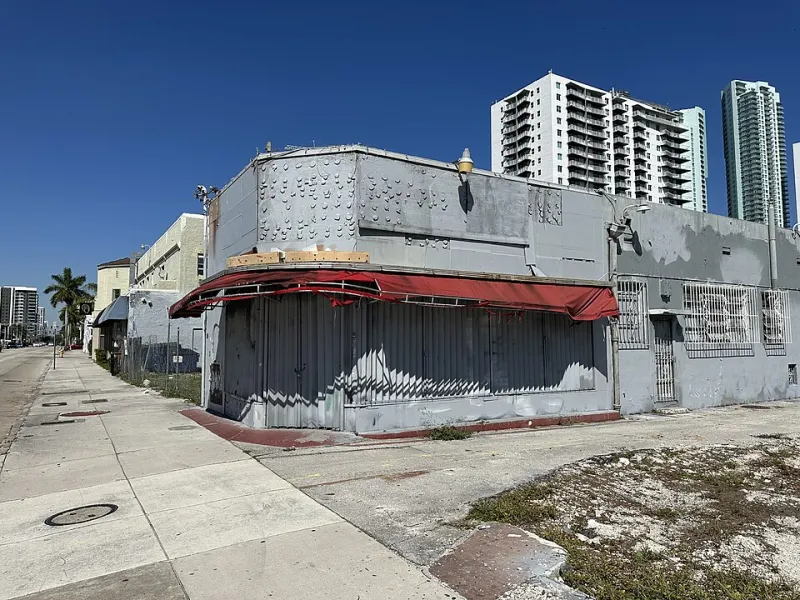
Photo: Phillip Pessar, CC BY 2.0, via Wikimedia Commons
There is a particular hour — somewhere past two, before the first delivery trucks groan to life — when the American night belongs almost entirely to the writer. The phone stops. The household sleeps. The diner's coffee tastes like tin and patience. It is in this hour that some of the country's most enduring prose was drafted, revised, and occasionally rescued from despair.
The Diner as Drafting Room
Ask around in literary circles and a pattern emerges that no MFA program advertises: the diner booth. Jack Kerouac famously fed his marathon sessions on coffee and chain-smoked concentration, but he was hardly alone. In cities across the Midwest, night-shift waitresses still tell stories of the same faces at the same tables — novelists, mostly unrecognized, nursing a bottomless cup while the rest of the nation dreamed.
The appeal is not romance. It is logistics. The night shift diner offered light, heat, a bathroom, and — crucially — no one who needed anything from you. For writers holding day jobs as teachers, machinists, or insurance clerks, midnight was the only unclaimed territory on the map of a working life.
Insomnia as an Unpaid Editor
There is also a stranger truth: the exhausted mind behaves differently. Neuroscientists now speak of hypnagogic states, the liminal fog between waking and sleep, where associative thinking loosens and unlikely connections form. Writers discovered this long before the research caught up. The sentences written at three in the morning often carry a strangeness that daylight revises out — and the best writers learned to protect that strangeness, editing at dawn what they had dreamed up in the dark.
Toni Carson, a retired typesetter in Minneapolis who published three novels with small presses, put it plainly in a 1987 interview that has since circulated among night-writing devotees: "The day belongs to everyone. The night was the only thing I owned."
The Motel Room and the Garage
Beyond the diner, the geography of nocturnal American writing spreads wide. The cheap roadside motel — a desk, a lamp, a window air conditioner's drone — became a portable studio for writers on the move. The suburban garage, that cathedral of American private space, housed typing desks wedged between lawnmowers and holiday boxes. What these places shared was a quality the modern open-plan world has nearly abolished: interruption-proof solitude.
When the Night Stopped Being Quiet
Here is the uncomfortable present tense. The internet does not sleep, and neither, increasingly, do we. The blue glow has colonized the hour of the wolf. The writer who once faced a blank page and silence now faces a blank page and seven thousand notifications, each one a small argument against deep attention.
The loss is subtler than distraction. True night — dark, quiet, socially unreachable night — imposed a discipline of its own. You could not post from a diner booth in 1974. You could only write, and wait, and write. The darkness was not merely a backdrop; it was a collaborator, holding the writer's uncertainty long enough for something true to form.
Reclaiming the Dark
A small counter-movement is stirring. Writers' residencies in rural Vermont and New Mexico advertise their lack of cell signal as their finest amenity. Some novelists have taken to writing on dead-battery laptops or, more dramatically, unplugging the router and hiding it. Bookstores in Portland and Asheville host "midnight manuscript" nights, gathering the sleepless to write in communal silence.
None of this will restore the night as it once was. But the impulse behind these gestures — the hunger for an owned hour, a quiet room, a mind left alone with itself — suggests the muse of the night shift is not gone. She is merely waiting for us to turn off the lights.