The Cloth Speaks First: Inside America's Volunteer Flag Redesign Movement
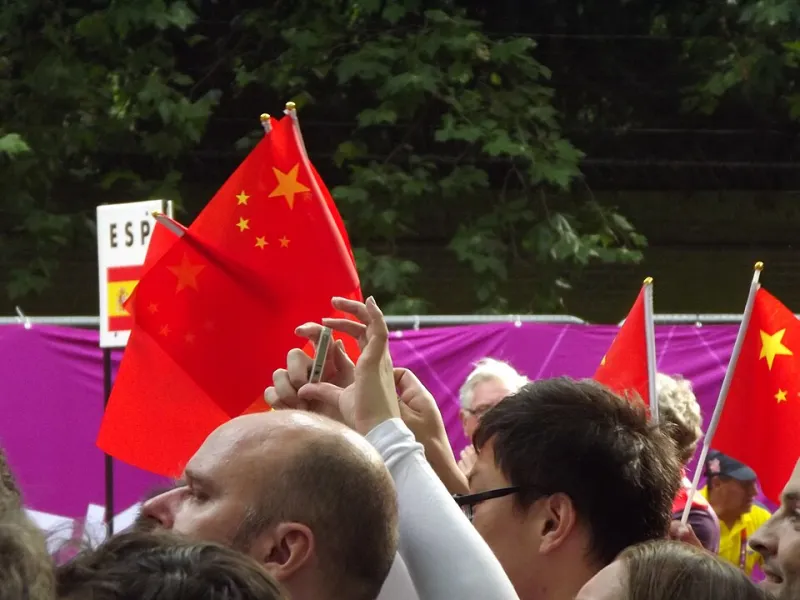
Photo: Colin Smith , CC BY-SA 2.0, via Wikimedia Commons
A Flag So Bad It Became Famous
For decades, the most photographed banner in Pocatello, Idaho, was not a source of civic pride but a punchline. The city's 1999 flag — a plain white field stamped with a logo, a slogan reading 'Proud to Serve You,' and a pair of trademark symbols — earned it the title of 'worst city flag in America' among vexillology enthusiasts. It was, in the words of the North American Vexillological Association, less a flag than a legal disclosure.
Then, in 2017, something remarkable happened. Pocatello residents, many of them teenagers, flooded city hall with redesign submissions. A city council that had never debated heraldry found itself weighing geometry, color theory, and the weight of civic symbolism. The winning design — a simple sun over mountains — cost the city nothing but a public meeting and a little courage.
Pocatello is not alone. From Tulsa to Boise to South Bend, a grassroots movement is persuading American municipalities to retire their cluttered, logo-stamped banners and fly something worth looking at.
Why Flags Fail
The disease afflicting municipal flags has a recognizable pathology. Most were adopted in the 1960s through 1990s, when city governments treated flags as letterhead — places to cram in a seal, a founding date, and a motto in a typeface readable only at close range. The result, repeated across thousands of towns, is the so-called 'seal on a bedsheet': an indistinct blue or white rectangle that, hoisted on a pole against the sky, becomes invisible.
The rules for avoiding this are surprisingly old and stubbornly simple. Good flags, vexillologists argue, are reducible to a child's drawing. They use two or three colors, no lettering, and symbols that mean something to the people underneath them. Chicago's municipal banner — two light-blue stripes and four red stars — is the canonical success story, beloved to the point of tattoo. New Mexico's sun-symbol flag achieves more with less than almost any design in the world.
What changed in the last decade is not the rules but the audience. Roman Mars's 2015 TED talk on flag design introduced millions of Americans to the idea that a flag is a piece of public art they have a stake in. Suddenly, the bedsheet seal looked less like tradition and more like neglect.
The Volunteer Vexillologists
The redesign movement runs on unpaid labor. In city after city, the process looks strikingly similar: a local design enthusiast — often a graphic designer, often working alone at first — writes an op-ed or starts a petition. A city council, sometimes reluctantly, opens a submission window. Volunteer committees sift through dozens or hundreds of entries, holding public meetings where citizens argue passionately about whether a river should run diagonally or horizontally, whether a star honors history or flattens it.
These debates are the point. A flag redesign forces a town to answer an uncomfortable question in public: who are we, actually? The conversations are frequently contentious. In some cities, residents have clashed over whether Indigenous imagery honors or appropriates. In others, debates over Confederate-adjacent symbols have made flag redesign a proxy for larger reckonings. The flag becomes a mirror, and not every town enjoys the reflection.
But the process is also radically democratic in a way civic design rarely is. A flag chosen by committee and public comment belongs, genuinely, to the people who argued over it. It cannot be bought, and it cannot be quietly rebranded by a marketing consultant.
What the Cloth Says
A skeptical observer might ask why any of this matters — whether cloth and color can mean much in an era of distributed attention. The answer, offered by nearly everyone who has participated in one of these redesigns, is that a flag is the one piece of civic identity a person can choose to stand under. It is optional belonging, made visible.
Consider what has been happening in the sky above American cities lately. Flags designed by volunteers now fly over skate parks and city halls alike. Teenagers who never attended a council meeting before show up to defend a color palette. Local newspapers, starved for stories of genuine civic engagement, cover the deliberations in detail.
There is a lesson here for anyone worried about the fraying of shared public life in the United States. The flag redesign movement works precisely because it is small, local, and concrete — a project with a deadline, a deliverable, and a result everyone can see from the highway. It asks citizens to disagree about something that matters to their shared identity but not to their party affiliation. In a fragmented culture, that is a rare and precious kind of argument.
The next time you pass a municipal building, look up. If the flag above it is a blue rectangle with an illegible seal, a conversation has not yet happened. Somewhere in that town, someone is probably drafting an op-ed to start it — and a better banner, and perhaps a better question about belonging, is waiting to be raised.