Where the Marquee Still Glows: The Single-Screen Theaters That Became Their Towns' Beating Heart
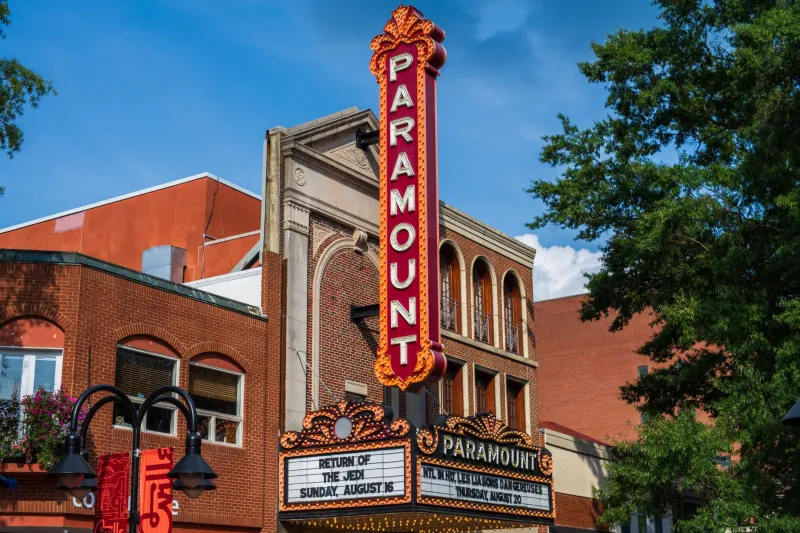
The marquee reads the same way it has for seventy years: three lines of changeable black letters against a cream backdrop, announcing this weekend's feature and, beneath it, the pie sale at the Methodist church. In Winterset, Iowa; in Red Cloud, Nebraska; in dozens of towns you would drive through without slowing down, the single-screen movie theater endures — not as nostalgia, but as infrastructure.
The streaming era was supposed to finish these buildings off. Instead, a curious reversal has taken hold. The very convenience that threatened to make the local picture house obsolete has become the reason people cling to it. When every film is available on every device, the theater's monopoly on the product evaporates. What remains is the thing that could never be downloaded: the room, the town, the shared dark.
The Economics of Stubbornness
Running a single-screen theater in 2024 is an act of arithmetic defiance. A digital projector costs more than many owners' first cars. Studio booking terms squeeze independent exhibitors hardest at the smallest scale. And yet the theaters persist, often because the people running them have stopped thinking of themselves as businesspeople and started thinking of themselves as custodians.
Consider the model adopted by a growing number of these houses: the film is the anchor tenant, but the building is the enterprise. Saturday matinees share the calendar with high school choir concerts, election-night gatherings, traveling lecture series, and — in one Minnesota town — the funeral of the theater's own longtime projectionist, held on the stage he worked beside for four decades. The screen faces the community; the community, in turn, faces the screen.
This is not a new arrangement, but it is a newly deliberate one. The vaudeville houses and opera halls of the nineteenth century served exactly this civic function. The single-screen cinema, built in the 1910s through the 1940s on nearly every Main Street in America, inherited the role and then, for a generation, forgot it. What we are witnessing now is not the rescue of an old business model but the recovery of an older purpose.
A Landmark That Earns Its Title
Preservationists have a phrase for buildings like these: they are significant not merely because they are old, but because they continue to do the work they were built to do. That distinction matters. A preserved theater that shows nothing but its own reflection is a mausoleum. The theaters thriving today are the ones where the community's claim on the building is as strong as the owner's.
Many now operate as nonprofits, a structural shift that has quietly transformed their civic standing. When a theater belongs to a town rather than to a proprietor, every decision about what plays on the screen becomes a communal act. Documentaries about the local watershed sell out. A retrospective of the state's film history draws three generations. The building becomes a mirror in which a town studies itself — flattering and unflattering by turns.
There is a progressive argument buried in this story, and it is worth stating plainly: access to culture should not be a function of geography. For the resident of a rural county, the local theater is not a luxury; it is one of the few remaining venues where art arrives in person, unmediated, requiring nothing but a seat and a ticket. Its loss would not merely remove entertainment. It would remove a commons.
What the Room Knows
Spend an evening in one of these houses and you understand what streaming cannot replicate. The laughter is collective and unpoliced. The audience includes the woman who ran the concession stand in 1988 and the teenager who has never known a theater with more than one screen. Strangers arrive as strangers and leave having argued about the ending.
The owners I have spoken with describe their role in almost pastoral terms. They are not selling movies; they are keeping a lamp lit. One put it this way: "If we close, the town doesn't lose a theater. It loses the last place where everyone still shows up at the same hour for the same reason."
That is the real headline the marquee cannot spell out. In an age of infinite private screens, the single-screen theater survives because it offers the one thing the algorithm never will: the experience of being a public, together, in the dark and then out again into the same small town square. The picture show, it turns out, was never just about the picture. It was about the show — all of us, in our seats, at the same time.