Speaking in Code: The Linguistic Underground That Gen Z Built and Linguists Are Racing to Map
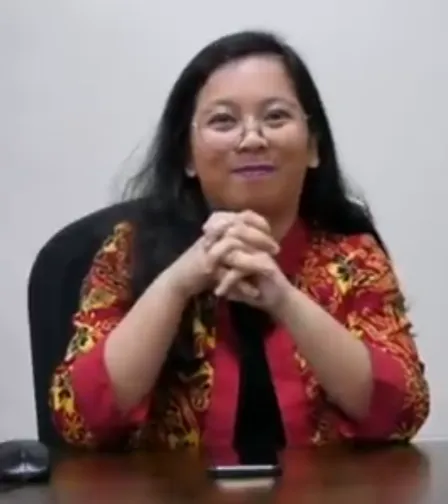
Photo: ANU TV, CC BY 3.0, via Wikimedia Commons
Language has always changed. That is not the story here. What is remarkable about the current moment is not that young people are inventing new words—every generation does—but the speed at which entirely new linguistic ecosystems are forming, fragmenting, and evolving, often within communities so specific that an outsider would not even recognize that a distinct dialect was being spoken.
In Discord servers dedicated to niche fandoms, in the comment sections of gaming livestreams, in the shared vernacular of TikTok subcultures with names the mainstream has never encountered—a generation is constructing language with a fluency and velocity that has genuinely surprised the scholars whose job it is to study such things. The implications extend well beyond vocabulary lists.
A Different Kind of Slang
It would be a mistake to treat what is happening as simply an accelerated version of the slang cycles that have always characterized youth culture. Previous generations produced memorable coinages—some of which entered the standard lexicon, most of which faded. What distinguishes the current moment is both the structural complexity of the new linguistic systems and the intentionality behind their creation.
Many of the dialects emerging from online subcultures are not just lists of new words grafted onto standard English grammar. They involve modified syntax, repurposed punctuation, deliberate misspellings that carry specific tonal information, and acronyms whose meanings shift depending on context and community. Some communities have developed what amount to register systems—ways of speaking that signal not just identity but degree of belonging, distinguishing casual participants from committed insiders.
Linguists studying these phenomena note that what is being observed in certain online communities resembles, in compressed form, the kind of linguistic differentiation that historically took generations to develop in geographically isolated populations. The internet has collapsed the timeline without eliminating the underlying social dynamics.
The Architecture of Belonging
To understand why these linguistic systems develop, it is necessary to understand what they are for. On the surface, shared slang functions as a social signal—a way of indicating membership in a particular community. But the dialects emerging from Gen Z subcultures often serve a more complex purpose: they are simultaneously a welcome mat and a locked door.
This dual function is not accidental. In communities that have formed around marginalized identities, niche interests, or experiences the mainstream has historically dismissed, the creation of a private language is a protective act. It allows members to communicate with one another in spaces that may be observed by hostile outsiders without those outsiders fully grasping what is being said. Queer communities, in particular, have a long history of this practice—Polari in mid-century Britain, ballroom culture's lexicon in American cities—and contemporary Gen Z communities are consciously or unconsciously extending that tradition.
But protection is only part of the story. These languages also create genuine intimacy. To speak fluently in a community's dialect is to demonstrate investment—time spent, attention paid, belonging earned. The friction involved in learning the language is not a bug; it is a feature. It ensures that the community remains, at some level, a community rather than an audience.
The Linguists in the Lobby
For professional linguists, this landscape presents both an extraordinary opportunity and a methodological challenge. The traditional tools of linguistic fieldwork—extended immersion in a community, careful documentation of speech patterns over time—are not easily applied to communities that exist primarily online, that may form and dissolve within months, and that are often explicitly suspicious of outside scrutiny.
Several American universities have begun developing new research frameworks specifically designed for studying internet-native linguistic communities. These efforts involve digital ethnography, corpus analysis of publicly available text, and collaboration with community members who are willing to serve as informants—a term that carries its own complicated history and that researchers in this field are working to reframe.
What these researchers are finding challenges some longstanding assumptions about how language change works. The role of prestige, for instance—historically one of the primary drivers of linguistic adoption, with lower-status speakers adopting the speech patterns of higher-status ones—functions very differently in online communities. In many subcultures, prestige is conferred not by conventional social status but by demonstrated fluency in the community's own terms. The highest-status speakers are often those who have pushed the dialect furthest from standard English, not those who have moved toward it.
When Language Becomes a Wall
The gatekeeping function of subcultural language raises questions that are worth examining with some care. There is a meaningful distinction between language that protects a community from hostile intrusion and language that is used to exclude people who might otherwise belong.
Cultural critics have noted that some online communities use linguistic complexity as a mechanism for policing membership in ways that can replicate, rather than resist, mainstream hierarchies of exclusion. When the barrier to entry is not shared experience or genuine affinity but rather the capacity to rapidly absorb and perform a specific linguistic register, the communities that result may be less diverse than they appear.
Gen Z creators and community members who have thought carefully about this dynamic tend to be more nuanced on the subject than either their critics or their champions. Many distinguish between dialects that evolved organically from shared experience and those that are deployed instrumentally to perform exclusivity. The former, they argue, is culture; the latter is cosplay.
The Future Arrives Untranslated
What does it mean for American culture that a significant portion of the population under thirty is conducting substantial portions of its social and creative life in linguistic registers that are largely opaque to everyone else? The question is not rhetorical. Language is not merely a tool for communication; it is the medium in which culture is made and transmitted. When communities develop genuinely distinct linguistic systems, they are not just finding new ways to say old things. They are, in some meaningful sense, developing new ways of thinking.
The historical precedents for this kind of rapid linguistic fragmentation are not entirely comforting. Languages and dialects have always been bound up with questions of power, access, and belonging. What is new is the scale and speed of the current moment—and the degree to which the communities doing the innovating are aware of what they are doing.
Gen Z is not simply stumbling into new language. In many cases, it is building it deliberately, with a sophistication about language as a social technology that older generations rarely possessed at the same age. Whether that sophistication will produce more equitable communities or simply more elaborate walls remains genuinely open. The linguists are watching. So, increasingly, is everyone else.