Perpetually Becoming: How Leaving Work Unfinished Became the Most Radical Act in Contemporary Art
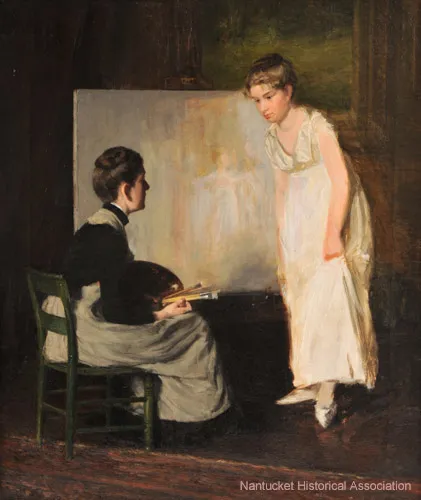
Photo: Elizabeth Rebecca Coffin - all made before 1906, Public domain, via Wikimedia Commons
There is a particular kind of discomfort that arrives when something ends before you expect it to. A sentence that trails off. A canvas where the background bleeds into bare linen. A novel whose final chapter was never written. For most of recorded artistic history, incompleteness has been treated as a wound—evidence of death, illness, or failure. Today, a growing number of creators are treating it as a destination.
Across music, visual art, and literature, artists are making a pointed choice: to leave major works open-ended, unresolved, and deliberately unpolished. What was once considered a private tragedy—the unfinished manuscript discovered in a drawer, the symphony abandoned at the third movement—is now being offered to audiences as the work itself. The question worth sitting with is not whether this is a gimmick, but why it feels so urgent right now.
The Tyranny of the Finished Thing
To understand the appeal of incompleteness, it helps to understand what completion has historically demanded. In Western artistic tradition, a finished work carries enormous authority. It is signed, sealed, and submitted to posterity. It announces: this is what I meant to say. That authority, however, comes with a kind of violence—the foreclosure of possibility, the silencing of every version that might have existed.
For many contemporary artists, particularly those working in the post-pandemic cultural landscape, that authority feels not only artificial but dishonest. Life, after all, does not resolve neatly. Grief does not conclude. Political struggle does not arrive at a tidy denouement. Why should art pretend otherwise?
Visual artists have been especially vocal on this point. Several painters working in the American abstract tradition have begun exhibiting works they describe as "in permanent process"—canvases that may be altered between gallery showings, or that are explicitly offered to collectors with the understanding that the artist reserves the right to continue working on them. The provocation is intentional. Ownership of a finished object is straightforward; ownership of something still becoming is a different kind of relationship entirely.
Music Without Resolution
In the world of contemporary classical and experimental music, the unfinished work has taken on particular resonance. The ghost of Schubert's so-called "Unfinished Symphony" looms large in any conversation about incompleteness in music—a work that has survived for two centuries precisely because its truncation invites endless interpretation. Modern composers are now invoking that legacy consciously rather than accidentally.
Several composers working in the American new music scene have begun releasing what they call "open scores"—notated works that include deliberate lacunae, passages marked only with duration and silence, or movements that offer performers multiple possible routes through the material. The score is not a blueprint for a single definitive performance; it is a map with several destinations.
For listeners trained on the satisfactions of tonal resolution, this can be genuinely disorienting. But disorientation, these composers argue, is precisely the point. The expectation of resolution is itself a cultural habit, one that carries ideological weight. To withhold resolution is to refuse a certain kind of reassurance—and to ask the listener to supply their own.
Literature's Productive Fragments
In literary circles, the unfinished work has a long and complicated history. Kafka famously left instructions for his manuscripts to be destroyed; Max Brod famously ignored them. The result was The Trial, The Castle, and a body of work that has shaped world literature for a century. Whether Kafka's incompleteness was intentional or incidental remains a matter of scholarly debate, but the effect is undeniable: the open endings amplify rather than diminish the work's power.
Contemporary writers are drawing on this tradition with greater self-awareness. A number of American novelists and essayists have published works they describe as "first and final drafts simultaneously"—texts that retain the visible seams of revision, with crossed-out passages left readable, marginal notes incorporated into the main text, and endings that acknowledge their own provisionality.
This approach is not without its critics. There are those who see it as a convenient excuse for avoiding the hard discipline of revision—a way of aestheticizing laziness. That critique deserves to be taken seriously. There is a meaningful difference between a work that is incomplete because the artist ran out of time or courage, and one whose incompleteness is itself the argument. The challenge for both artist and audience is learning to tell the difference.
Audiences in the Gap
What is perhaps most interesting about this trend is not what it demands of artists, but what it demands of audiences. A finished work, however challenging, offers a stable object for response. An unfinished one invites—or compels—the viewer, listener, or reader to become a participant in the making of meaning.
This is not an entirely new idea. Reader-response theory has been arguing for decades that meaning is co-created between text and audience. But there is something different about a work that wears its incompleteness openly, that does not merely allow for interpretation but structurally requires it. The gap in the canvas, the silence in the score, the missing chapter—these are not absences so much as invitations.
For audiences accustomed to consuming culture in a state of passive reception, this can feel like an imposition. For others, it is a form of liberation. Several gallery-goers interviewed for this piece described the experience of encountering deliberately unfinished work as one of the most genuinely engaging aesthetic encounters they had had in years—precisely because it refused to do all the work for them.
The Ethics of Incompleteness
There are ethical dimensions to this conversation that deserve acknowledgment. When an artist presents an unfinished work as intentional, they are making a claim about their own authority—specifically, a claim to withhold the completion that audiences might feel entitled to expect. This can be a genuinely radical act. It can also be a form of control masquerading as openness.
The most compelling practitioners of deliberate incompleteness seem to understand this tension and work within it honestly. They are not simply refusing to finish; they are asking what finishing means, who it serves, and what is lost in the pursuit of polish. These are not small questions. In an era of algorithmic optimization and relentless content production, the decision to leave something raw, partial, and unresolved is, in its quiet way, a form of resistance.
The unfinished work does not ask to be judged against a standard of completion it never sought. It asks to be encountered on its own terms—as a thing still in the act of becoming, which is, when you consider it, precisely what the rest of us are too.