The Art of Letting Go: Why Some Creators Are Choosing Disappearance Over Legacy
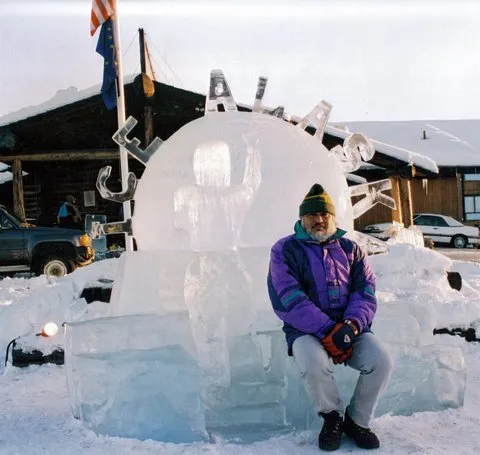
Photo: Abel Ramírez Águilar, CC BY-SA 3.0, via Wikimedia Commons
There is a particular kind of grief that arrives when something beautiful is destroyed on purpose. Not through neglect or accident, but through deliberate, considered intention. It is the grief of watching a sand mandala swept away by a monk's open palm, or a manuscript fed page by page into a fire while an audience watches in silence. It is, for many who witness such acts, deeply unsettling — and perhaps that is precisely the point.
Across the United States and beyond, a quiet but resolute movement has taken root among artists, musicians, and writers who are choosing impermanence not as a limitation but as a medium. These creators are not simply making work that fades; they are engineering its disappearance with the same care and intentionality that others bring to conservation and archival preservation. The resulting tension — between creation and erasure, between meaning and its dissolution — has become one of the more philosophically charged conversations in contemporary American art.
Ice, Fire, and the Vanishing Score
The most visible examples tend to be sculptural. Ice carving has long carried an implicit acknowledgment of loss — every swan, every architectural facade rendered in frozen water exists in dialogue with entropy. But a newer generation of ice artists has moved beyond mere acceptance of transience into active celebration of it. Artists like New York-based sculptor Nora Vasiliou have begun staging events in which the melting itself is the performance: lighting shifts as the form collapses, audio compositions respond in real time to sensors tracking the sculpture's diminishing mass. The work is never photographed for commercial distribution. When it is gone, it is gone.
Musicians have pursued similar territory. The American composer Annelise Dumont — working out of a small collective in Asheville, North Carolina — has built a practice around what she calls "single-instance scores": compositions written for one performance, after which the physical score is burned in a ceremony attended by the musicians who played it. Recordings are prohibited. Dumont has spoken in interviews about the way this practice reorients the listener's attention: "When you know there is no recording, you stop thinking about how you'll remember it later. You're just there. Completely there."
Writers, too, have entered this space. A small but growing number of literary artists have staged public readings of manuscripts subsequently destroyed — sometimes shredded, sometimes submerged in water, occasionally burned in fireproof containers outside independent bookstores. The literary journal Threshold ran a celebrated series in 2022 in which each contributor's piece existed only in a single printed copy, distributed by lottery and never digitized.
Against the Archive
To understand why this movement has gained traction now, it helps to consider what it is pushing against. We live in a cultural moment defined by the compulsive accumulation of documentation. Every concert is filmed on a dozen phones. Every gallery opening is photographed before the wine is poured. The digital archive has become not merely a tool for preservation but a kind of existential security blanket — proof that something happened, that it mattered, that it will persist.
The philosopher Walter Benjamin, writing nearly a century ago, described the "aura" of an artwork as something inseparable from its singular existence in time and space. Mass reproduction, he argued, diminishes that aura. What the contemporary impermanence movement seems to suggest is that we have arrived at a logical extreme: in a world where everything is infinitely reproducible, the only truly radical act may be to make something that cannot be reproduced at all.
This is not a nostalgic argument. The artists engaged in this work are not mourning the pre-digital world. Many of them use digital tools extensively in their practice. Rather, they are interrogating the assumptions that digital culture has quietly installed in our understanding of value — the idea that worth is proportional to reach, that significance requires an audience of thousands, that a thing only matters if it can be saved.
The Audience as Witness
One of the more striking features of this movement is what it demands from the people who encounter the work. When a piece cannot be taken home, shared online, or revisited, the audience is transformed from consumers into witnesses. There is a responsibility inherent in that role — a weight that many participants describe as unexpectedly moving.
At a 2023 event hosted by a Chicago arts collective, attendees were invited to contribute handwritten pages to a communal manuscript that was subsequently burned at the close of the evening. Several participants later described the experience as among the most emotionally resonant creative encounters of their lives — not despite the destruction, but because of it. The absence of a permanent record created a kind of intimacy that documentation would have diluted.
This speaks to something the cultural critic Elaine Scarry once observed about the relationship between beauty and attention: that the beautiful compels us toward a quality of noticing that ordinary experience rarely demands. Impermanent art, by foreclosing the option of revisitation, enforces that quality of attention in the present tense.
What Remains When Nothing Remains
The paradox at the heart of this movement is that it generates, despite itself, a kind of legacy — not in objects, but in memory and conversation. The people who witnessed Dumont's burned scores carry something forward. The attendees of that Chicago evening hold their experience in the private archive of their own consciousness. The work is gone; its effect is not.
This may be the most honest account of how art has always functioned. The cave paintings at Lascaux moved their creators' contemporaries in ways we cannot fully reconstruct. The oral epics that preceded Homer's written record shaped cultures through recitation and listening, not through permanence. The archive is a relatively recent obsession, and its authority may be less absolute than we have come to assume.
What the creators choosing disappearance are ultimately asking is not whether art should survive, but what survival is for. If a piece of music changes the way a hundred people hear silence, does it matter that no recording exists? If a manuscript moves its readers to reconsider something fundamental, does its subsequent destruction diminish that movement?
The answer, for a growing number of American artists, is a clear and considered no. In their hands, the act of letting go has become its own form of making — precise, intentional, and, in its own way, enduring.