Short Order, Long Memory: How the Diner Menu Writes American History
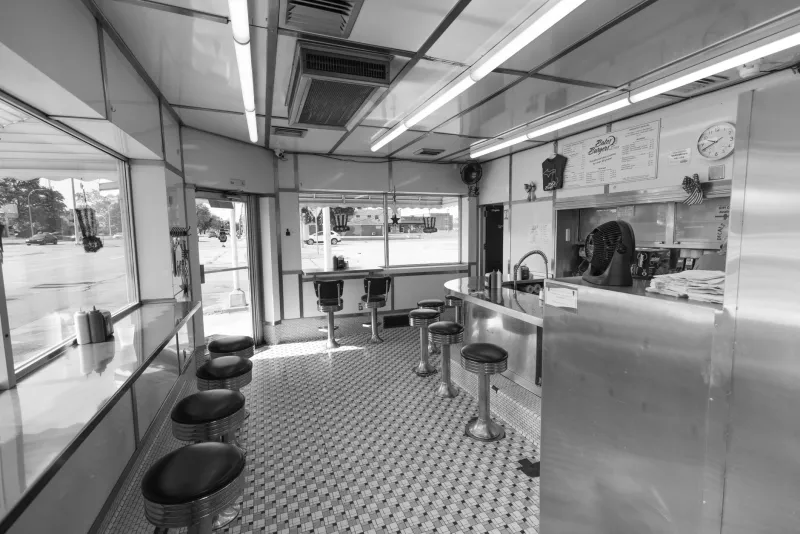
The menu at the Bluebird, a diner in Columbia, Missouri, is laminated in plastic so old it has gone soft at the corners. It is ring-bound, four pages, and slightly sticky. It is also a piece of American vernacular literature—not because it is elegantly written, but because it performs the work of a memoir, a map, and a sales pitch in the space of a lunch order.
“Home style.” “Secret recipe.” “Since 1957.” These phrases are not neutral. They are claims about origin, authenticity, and belonging. They tell the customer who they are and where they are, even when the customer is from somewhere else. The diner menu is one of the few widely read texts in American life that almost no one studies as a text. It deserves better.
The Menu as Memoir
Consider the opening paragraph of the Bluebird’s menu: “Opened in 1957 by Gus and Marie Holloway, the Bluebird has served the same chicken-fried steak for sixty-six years. We still use Gus’s original recipe, though we have swapped the lard for shortening. We think he would understand.” That is a family history, an apology, and a brand statement in three sentences. It is also a small act of literary craftsmanship.
Menu designer Ruth Ann Kessler, who has worked with independent diners across the Midwest for three decades, calls this “the origin paragraph.” “Every diner needs one,” she says. “It doesn’t have to be true in every detail. It has to be true in the way a family story is true.” Kessler designs menus that look handwritten, even when they are printed. She uses a font called “Gus’s Hand”—a digitized version of a diner owner’s actual handwriting. The effect is intimacy. The customer is not reading a corporate document. The customer is reading a note from the owner.
The Designer’s Hand
The physical menu matters as much as the words. Lamination is not merely practical; it is a signal. A laminated menu says: we expect you to spill. A paper menu says: we expect you to behave. The ring binding says: we have been here long enough to need repairs. The coffee stain on page two says: someone was here before you, and they were happy.
At a diner in rural Ohio, the menu includes a section called “Things We Used to Serve.” It lists dishes no longer available—liver and onions, Jell-O salad, a “dieter’s plate”—with prices from the 1980s. The owner, a man named Dale, says he keeps it “for the old-timers.” But the section does something else: it establishes the diner as a place with a past, which is to say a place with a soul. The customer who orders the meatloaf is not just buying lunch. They are buying continuity.
“Since 1957”
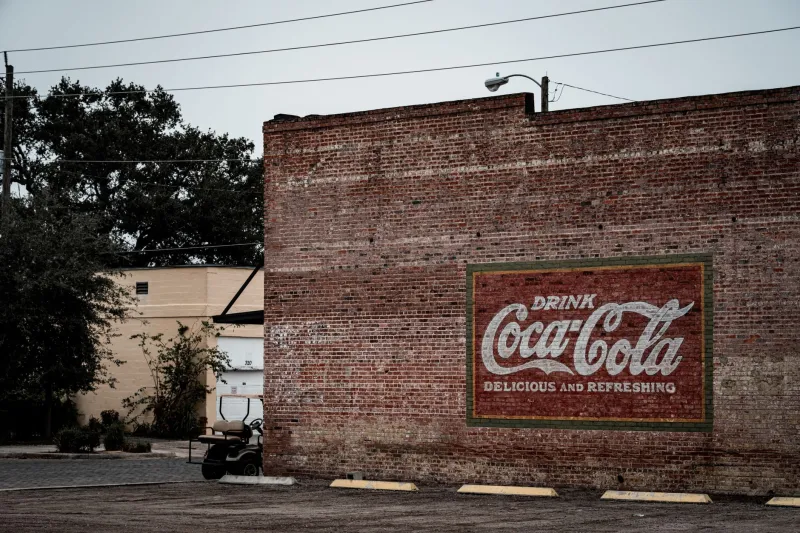
The phrase “since 1957” is a small masterpiece of American self-mythology. It appears on menus, signs, and paper placemats across the country. It is rarely accurate in any strict sense—many diners have changed owners, locations, and recipes. But accuracy is not the point. The phrase says: we have survived. In a country that prizes novelty, survival is a form of authority.
Regional historian Marcus Bell, who has collected more than 2,000 diner menus for a digital archive at a state university, argues that these phrases do cultural work far beyond lunch. “The menu is a claim of belonging,” he says. “It says, ‘This town has a place where time is kept differently.’ That is a promise. Sometimes it is a lie. But it is a promise people want to believe.”
The Secret Recipe Problem
“Secret recipe” is the menu’s most reliable sales pitch and its most fragile promise. The phrase implies a hidden knowledge, a family trust, a reason to choose this diner over another. But in an era of online reviews and reverse-engineered recipes, secrecy is harder to maintain. Some diners have responded by leaning harder into the language: “Our secret recipe is so secret we don’t even know it.” Others have abandoned the phrase entirely, replacing it with “our recipe”—a shift from mystery to ownership.
Short-order cook Luis Ortega, who has worked the grill at a diner in Tucson, Arizona, for nineteen years, laughs at the phrase. “There is no secret,” he says. “There is butter. There is salt. There is time. The secret is that we do it the same way every day.” That, too, is a kind of literature: the sentence that tells the truth behind the myth.
The Cook’s Counter-Argument
Ortega’s point is worth taking seriously. The menu’s language is often written by owners and designers, not by the people who cook the food. The cook knows that “home style” means “we use a lot of butter,” that “scratch-made” means “someone came in at 5 a.m.,” that “fresh” means “not frozen, probably.” The cook’s counter-argument is not an argument against the menu. It is an argument for reading it with a cook’s eye: for noticing what the language is doing, and for asking who benefits.
What We Order When We Order History
At the Bluebird, a man in a Cardinals cap orders the chicken-fried steak. He has been coming here since he was a boy. He does not read the menu; he knows it by heart. But he still picks it up, turns it over, and sets it down. The menu is not just a list of food. It is a small, laminated promise that the town he grew up in still exists. He orders it, and for an hour, it does.