Curtains, Raised: The Quiet Rescue of America's Small-Town Stages
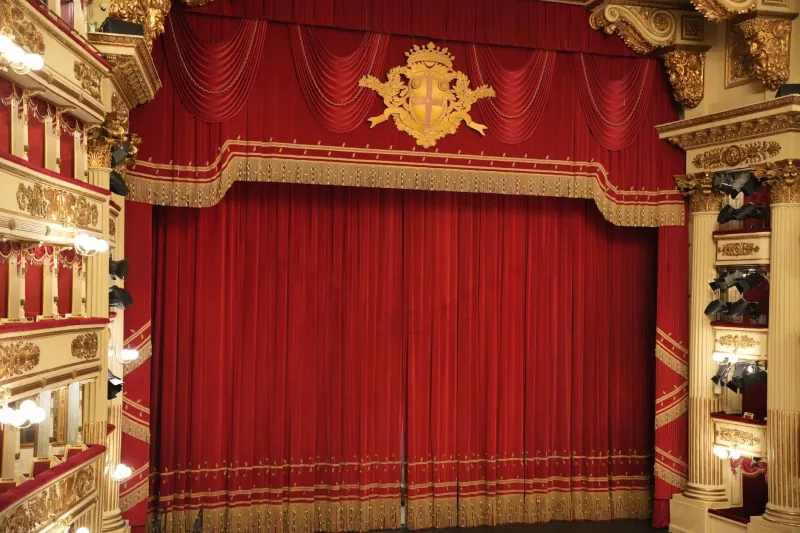
The marquee lights came back on in Albion, Nebraska — population just under 2,000 — on a Saturday evening in October, and half the county showed up. The restored 1913 opera house, dark for decades, smelled of fresh paint and old plaster. A retired schoolteacher who had spent four years leading the restoration effort stood in the lobby, weeping quietly, as the local community orchestra tuned up beneath a newly gilded proscenium arch.
Scenes like this are repeating with startling regularity across the American interior. From the grain belt of Nebraska to the river towns of Ohio and the mill villages of western North Carolina, neglected theaters — vaudeville houses, movie palaces, opera halls built when traveling troupes arrived by rail — are being pulled back from the brink. Not by entertainment conglomerates, but by bake sales, legacy donations, and civic stubbornness.
When the Curtain Falls for Good
The decline was long and well documented. Television emptied the houses first, then multiplexes, then streaming finished the job. By the 1990s, hundreds of these venues sat as furniture warehouses, discount stores, or simply holes in the streetscape of Main Streets already struggling. In many towns, the theater's failure became a kind of civic symptom — the visible proof that the center was not holding.
What the obituaries missed was the asset hiding in plain sight. These buildings were engineered for gathering. Their acoustics, their sightlines, their very scale were designed to make a few hundred strangers feel like an audience. In an era when entertainment is consumed alone, in fragments, on handheld screens, that architecture has become newly precious.
Three Towns, Three Battles
Consider the arc of three representative rescues. In Albion, the effort began with a roof leak and a historical society's alarm; the town raised money through quilt auctions and a bequest from a ranching family whose mother had played piano for silent films in the very hall.
In Pomeroy, Ohio, a river town that has watched its population halve since 1950, volunteers spent nearly a decade restoring the local movie palace, one grant application at a time. The theater now hosts everything from bluegrass nights to high school graduations — a schedule its founders describe as deliberately "un-sophisticated."
And in Mount Airy, North Carolina, the restoration of a 1920s vaudeville house became an anchor for a broader downtown revival, drawing visitors who come for the weekend and stay for the show.
Different geographies, different funding puzzles — but a shared grammar of persistence. Nearly every successful rescue involves a small cadre of retirees with time and skills, a town patriarch or matriarch whose memory of the venue is personal, and an incremental funding strategy that treats each restored row of seats as a victory in itself.
The Streaming Age's Contradiction
There is an irony here worth naming. The same technologies that hollowed out these houses have, indirectly, made them viable again. Remote workers have relocated to small towns with laptops in tow, expanding the local audience base. Crowdfunding platforms let a restoration appeal reach former residents scattered across the country — the diaspora of every small town, now one click from its hometown marquee.
But the deeper explanation is cultural, not economic. Americans are living through a well-documented loneliness recession, and the hunger for what sociologists call "third places" — spaces that are neither home nor work — has become a genuine political and civic concern. A theater, unlike a coffee shop or a gym, asks something of its attendees: presence, attention, participation in a shared experience that cannot be paused. That demand, once seen as a liability, now reads as the entire point.
More Than Nostalgia
Skeptics might reasonably ask whether these rescues are merely nostalgia — ornate monuments to a past that isn't coming back. The programming suggests otherwise. The most successful restored houses book forward, not backward: touring indie films alongside traveling theater, podcasts recorded before live audiences, drag shows and heritage festivals sharing calendars with the obligatory community production of Oklahoma!
The venues are also quietly becoming instruments of civic identity. A town that saves its theater is making a statement about what it believes it deserves — that beauty, craft, and collective experience are not luxuries reserved for cities. In an era of bitter divides over what American small towns are and ought to be, that statement carries real weight.
The house lights dim, the curtain rises, and for two hours a town of 2,000 people becomes an audience — which is to say, a public. It turns out that was never obsolete. It was only waiting for someone to fix the roof.