Guardians of the Overlooked: The Citizen Archivists Preserving What Institutions Left Behind
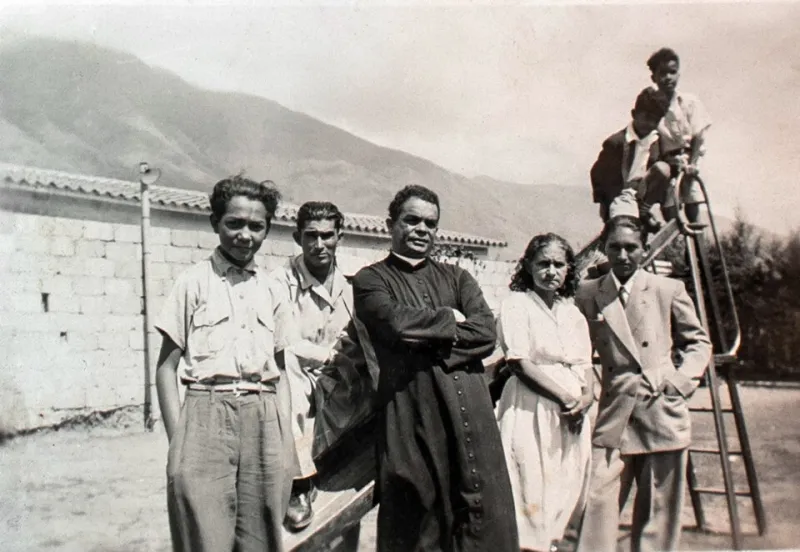
Photo: Nicolás Gavidia, scanned by Wilfredor, CC0, via Wikimedia Commons
In a converted spare bedroom in Akron, Ohio, there are approximately four thousand photographs of a neighborhood that no longer exists. They are organized by decade, cross-referenced by street address, and annotated in a hand so meticulous it might belong to a professional archivist. The person who assembled them is a retired high school history teacher named Darnell Whitfield, who spent the better part of twenty years tracking down former residents of the Summit Lake neighborhood — a predominantly Black community that was partially demolished in the 1960s to make way for highway construction — and asking them, simply, what they remembered.
Whitfield is not affiliated with any museum. His collection has never received a grant. He does not have a preservation budget or a climate-controlled facility or institutional backing of any kind. What he has is a profound sense of obligation — to a community, to a history, and to the people who lived it and found, afterward, that almost no official record acknowledged they had.
"The county historical society has maybe a dozen photographs from Summit Lake," he says. "Twelve. For a neighborhood where thousands of people lived and worked and built something real. I thought: if I don't do this, it doesn't get done."
The Archive Gap
Whitfield's situation is not unusual. Across the United States, a quiet and largely unheralded movement of citizen archivists is doing the work that formal cultural institutions, for reasons of funding, priority, or institutional bias, have consistently failed to do. They are preserving regional music scenes that major labels ignored. They are documenting the material culture of immigrant communities whose contributions to American life have been systematically underrepresented. They are maintaining the physical and oral record of neighborhoods, industries, and social formations that have been erased by urban development, economic collapse, or simple neglect.
The scale of what has been lost — and what is still being lost — is difficult to overstate. The United States has approximately 35,000 museums, but the vast majority are concentrated in urban centers and oriented toward narratives that have already achieved cultural legibility. The small, the local, the marginal, and the complex tend to fall outside their mandates. Historical societies in smaller cities and rural areas are frequently underfunded to the point of crisis. University archives, though often excellent in their areas of focus, are bounded by academic priorities that do not always align with community ones.
Into this gap, ordinary people have moved — driven by love, by grief, by the particular urgency of watching something disappear.
The Collector as Curator
The line between obsessive collector and serious archivist is, in practice, quite thin. Many of the individuals doing the most significant work in citizen preservation began as collectors — people drawn to a specific object type or cultural domain with an intensity that exceeded any obvious practical justification. Record collectors who specialized in regional pressings of soul and gospel music from the 1960s and 1970s have, over decades, assembled collections that represent the only surviving documentation of scenes that produced no books, no documentaries, and almost no mainstream coverage.
Rosario Medina, forty-one, runs what she calls an "unofficial archive" of Tejano music from the Rio Grande Valley out of her home in McAllen, Texas. Her collection includes recordings, concert flyers, band photographs, and oral history interviews with musicians who played the circuit in the 1980s and 1990s — a period she describes as critically underrepresented even within the broader history of Tejano music, which itself occupies a marginal position in most mainstream American music histories.
"There are musicians who played hundreds of shows, who shaped how a whole generation of people in this region heard music, who are completely invisible to any official record," she says. "I have recordings of them. I have their stories. I have photographs of them performing. That has to matter to someone."
The question of who that someone is — and how to reach them — is one that citizen archivists across the country are grappling with in increasingly sophisticated ways.
Digital Tools, Analog Urgency
One of the more productive tensions within the citizen archive movement is its relationship to digital technology. Unlike the analog revival taking place in certain creative communities, most serious amateur archivists have embraced digitization as a preservation imperative. The physical object — the photograph, the recording, the letter — remains irreplaceable in their view, but digital copies extend its reach and guard against physical loss.
Many citizen archivists have developed their own cataloging systems, scanning workflows, and online repositories, often sharing materials through platforms like the Internet Archive or through locally maintained websites that function as digital community museums. The sophistication of some of these operations rivals that of professional institutions — a fact that professional archivists themselves have begun to acknowledge, sometimes with admiration and occasionally with a more ambivalent recognition that the field's traditional gatekeeping functions are being circumvented.
This circumvention is not always comfortable. Questions of provenance, consent, and the ethics of representation are complex in any archival context, and citizen archives — operating without formal review processes or institutional accountability — are not immune to the problems that professional archives have spent decades developing frameworks to address. The community-centered orientation of most citizen archivists, however, often produces a more nuanced relationship with the people whose histories they are documenting than formal institutions have historically managed.
What the Collections Reveal
To spend time with serious citizen archivists is to encounter a particular and illuminating version of American identity — one assembled from the margins inward rather than from the center out. The histories being preserved in spare bedrooms and converted garages are not the histories that appear in textbooks or on the walls of major museums. They are the histories of people who were told, implicitly and sometimes explicitly, that their lives did not constitute material worth keeping.
The act of keeping, then, is itself a form of argument. Darnell Whitfield's four thousand photographs of Summit Lake are not merely a record of a neighborhood. They are a sustained and deliberate counter-claim against a version of local history that treated the destruction of that neighborhood as an unremarkable administrative decision. Rosario Medina's archive of Valley Tejano music is not merely a collection of recordings. It is an insistence that this music — and the community that made it — deserves to be remembered on its own terms.
In this sense, the citizen archive movement is as much a cultural and political act as it is a preservation one. It is a grassroots reassertion of who counts as a historical subject, conducted by people who are, in most cases, simply unwilling to accept the answer that official institutions have provided.
The museum in the attic is not a substitute for the museum downtown. It is, in many ways, a rebuke to it — and an argument, made in objects and photographs and carefully annotated files, that the story of this country is considerably larger, and considerably more various, than any single institution has ever managed to hold.