Celluloid Keepsakes: The Hand-Cranked Devotion of America's Last Volunteer Projectionists
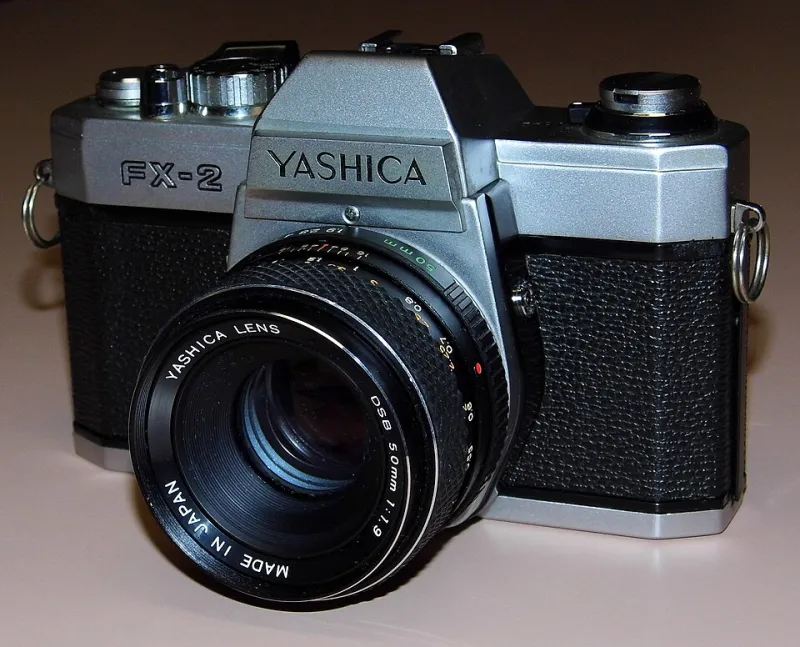
Photo: Joe Haupt from USA, CC BY-SA 2.0, via Wikimedia Commons
The projection booth at the Rialto in Winterset, Iowa, smells faintly of warm dust and machine oil. There is no computer hum here, no server rack blinking in the dark. There is a carbon-arc-era projector, a reel of 35mm film the width of a paperback, and a retired schoolteacher named Dale Merrin wearing cotton gloves, hunched over the gate with the concentration of a surgeon.
Dale is not paid. Nobody in this booth is. And yet, on a Friday night in a town of 5,000 people, the Rialto will show a 1956 western on actual celluloid to a full house — many of whom drove more than an hour for the privilege.
The Craft That Studios Left Behind
When the major studios completed their wholesale pivot to Digital Cinema Packages in the early 2010s, the change was framed as progress, and in many respects it was: lower shipping costs, pristine image quality, no reel changes. But the transition also rendered obsolete an entire body of knowledge — the mechanical intuition of threading a projector, splicing broken film, adjusting carbon rods, reading the subtle tremors of a machine that is, essentially, an industrial sewing camera running backward.
What survived the transition scattered into basements, historical societies, and single-screen theaters too stubborn or too poor to convert. And in those scattered places, something unexpected happened: the old projectionists began teaching.
"Nobody goes to school for this," says Merrin, who learned from a man named Orv, who learned from his father. "You learn by ruining a splice or two and having somebody patient stand behind you and say, 'Not yet. Wait for the cue mark.'"
An Apprenticeship Measured in Reels
The apprenticeship culture surrounding 35mm projection is informal, oral, and stubbornly alive. In towns like Franklin, North Carolina, and Valentine, Nebraska, retired booth operators — many of whom spent forty years in union houses in bigger cities — have taken on hobbyists the way a master woodworker takes on apprentices: slowly, and with standards.
The curriculum is physical. You learn to inspect a print for scratches and vinegar syndrome. You learn why film must be handled at the edges, why a splice should be pressed twice, why the take-up reel's tension matters more than anything digital. You learn that a 6,000-foot reel lasts roughly an hour, and that a two-hour picture means a changeover — a moment when two projectors, running in tandem, hand the film from one to the other in a feat of timing cued by a small circle that flashes briefly in the corner of the screen.
Audiences under forty often mistake that flickering dot for a flaw. It is, in fact, a handshake between machines — and between generations.
Why They Drive
Ask the people in the seats why they came, and the answers circle the same idea from different directions. A woman from Des Moines mentions "the flicker" — the faint, almost subliminal shimmer of film that digital projection eliminates in pursuit of perfection. A man who drove two hours from Omaha talks about grain, about how a movie photographed in 1960 looks like weather when projected from its original format, alive and breathing in a way that data cannot counterfeit.
There is something else, harder to name. Watching film in a small-town house is watching a local act of devotion. The volunteer upstairs made a choice to be there. The print arrived in a shipping case, not a download. The evening has texture — the clatter of the projector audible during quiet scenes, the brief darkness at a reel change — that reminds you cinema was always a mechanical art, a machine for sharing dreams.
Preservation as Participation
Film historians will tell you that celluloid is not merely a format but an archive: prints contain the wear, the splices, the occasional cigarette ash of every audience that came before. Screening film is therefore a form of civic memory-keeping, closer to tending a graveyard's headstones than to streaming a catalog.
Organizations like the Film Society of Lincoln Center's archival arm and regional nonprofits have begun formally supporting what volunteers built informally — helping small houses acquire retired prints, training new projectionists, documenting techniques before the last generation of operators takes its final bow.
But the heart of the practice remains stubbornly local. In Winterset, after the credits roll and the lights come up, Dale Merrin rewinds the reels by hand, logs the screening in a spiral notebook he has kept for six years, and locks the booth.
"People ask why I bother," he says. "I tell them: because when that light hits the screen, it came through actual film that touched actual air in 1956. You can't stream that."
In a culture that increasingly treats art as content and audiences as traffic, the volunteer projectionists of America's smallest towns are making a quieter argument — that some experiences are worth the drive, the grain, the flicker, and the hands that keep them running.