Against the Clock: The Young Artists Who Measure Their Practice in Years, Not Likes
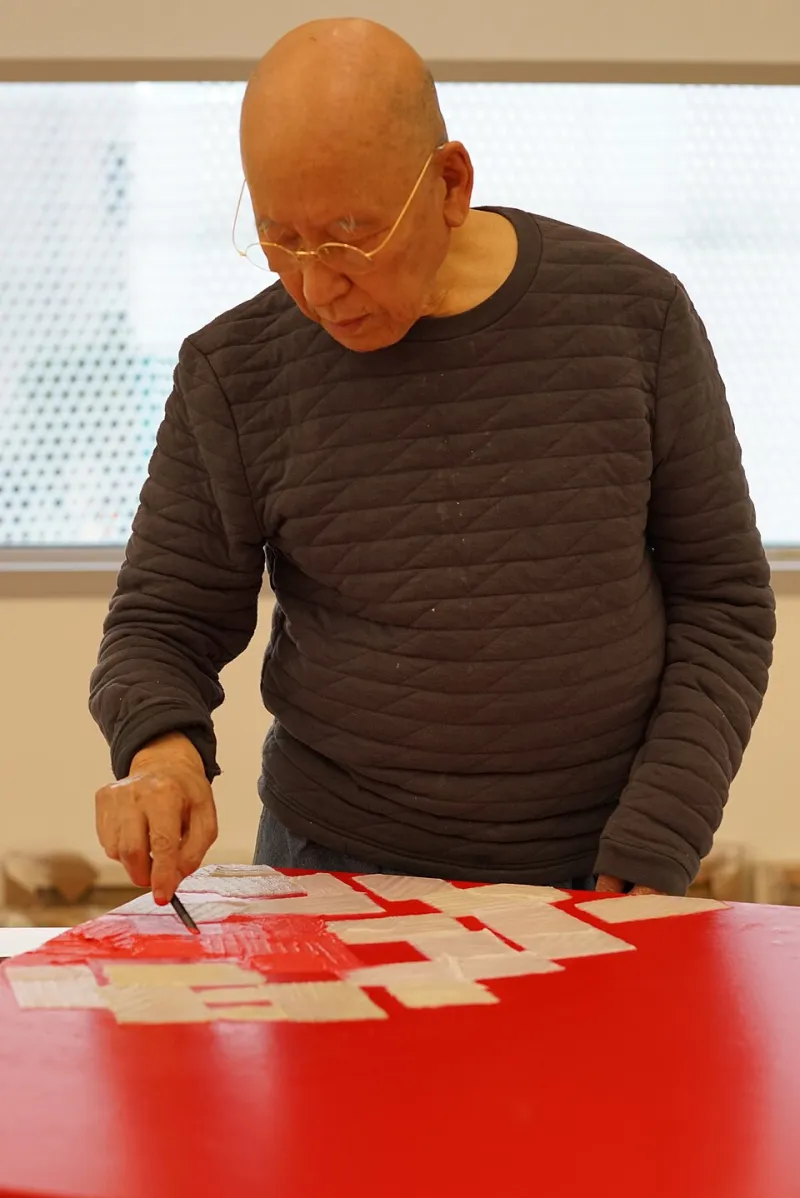
Photo: 선의의 바람, CC BY-SA 4.0, via Wikimedia Commons
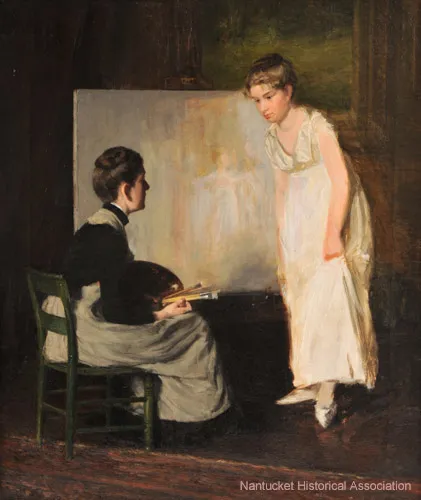
Somewhere in a rented studio in Asheville, North Carolina, a painter named Delia Marsh has been working on the same canvas since the spring of 2021. The piece—a vast, layered composition depicting the slow erosion of a family farmhouse she visited once as a child—is nowhere near finished. She does not expect it to be finished for at least another two years. She is twenty-nine years old, and she considers this the most serious work she has ever made.
"People ask me if I'm afraid the moment will pass," Marsh says, pausing over the phrase as though testing its weight. "But that's exactly the point. The moment already has passed. I'm painting something that exists only in memory, and memory doesn't move at the speed of a feed."
Marsh is not an anomaly. Across the country, a loose but discernible cohort of artists, writers, and makers in their twenties and thirties is choosing—deliberately, sometimes defiantly—to work at a pace entirely incompatible with the dominant rhythms of contemporary creative culture. They are producing multi-year paintings, decade-spanning literary projects, handmade books assembled page by page over half a lifetime. They post infrequently, if at all. They resist the language of productivity and output. And they are, in their quiet way, staging one of the more compelling rebellions in recent American art.
The Urgency That Wasn't Asked For
To understand what these artists are pushing against, one must first reckon with the particular pressure that the last decade has placed on creative work. The rise of algorithmic platforms—Instagram, TikTok, Substack, and their various successors—has introduced a new and largely invisible metric into artistic life: frequency. The creator who posts consistently is rewarded with visibility; the one who disappears, even briefly, is punished with obscurity. The result is a culture in which the pace of production has become inseparable from professional legitimacy.
This is not merely an economic observation. It is a philosophical one. When an algorithm decides that a six-week silence constitutes failure, it is making a claim about what art is for—and that claim is fundamentally at odds with the way most enduring work has actually been made. Proust did not publish In Search of Lost Time in installments optimized for engagement. Agnes Martin did not iterate toward minimalism on a quarterly schedule. The conditions that allow for genuine depth have almost always required the one resource that digital platforms treat as a liability: time.
Patience as Philosophy
For many of the artists working in this vein, slowness is not a temperamental quirk but a rigorously considered position. Marcus Oyelaran, a Chicago-based novelist who has been developing his first book since 2018, describes his process in terms that are almost architectural. "I think of the novel as a structure that has to bear real weight," he explains. "You can't rush the foundation. If I'd published something in 2020 because I felt the pressure to have a debut, I'd have published a building that would collapse."
Oyelaran's manuscript has gone through four complete structural overhauls. He keeps a dedicated notebook for each year of the project, a kind of annual report to himself on where the work stands and what it still needs. He is not sure when it will be finished. He is entirely sure that finishing it prematurely would be a form of failure indistinguishable from abandoning it.
This philosophy extends to the visual arts with particular intensity. In Providence, Rhode Island, ceramicist Yuna Takahashi has spent three years developing a single series of vessels, each one informed by months of research into specific regional clay traditions from her grandmother's prefecture in Japan. The work is painstaking in a way that the word barely captures—she has discarded more finished pieces than she has kept, treating the discard pile as essential to the process rather than a measure of waste.
"There's something the Japanese call shokunin kishitsu—roughly, the spirit of the craftsperson," Takahashi says. "It's not about perfection in the Western sense. It's about a devotion to the thing itself, for its own sake, over time. That's what I'm trying to practice."
The Archive of Waiting
What is perhaps most striking about this movement—if one can call it that, given its members' general resistance to branding—is how it reconfigures the relationship between process and product. In the conventional creative economy, the process is private and the product is public; the work exists to be released. For these artists, the years of labor are not a prelude to the real thing. They are the real thing, documented, accumulated, and in some cases intended never to be fully resolved.
Several of the artists interviewed for this piece keep meticulous records of their work's evolution: sketchbooks, voice memos, dated photographs of canvases at various stages. These archives are not portfolios. They are closer to journals, or perhaps to the kind of long correspondence one carries on with a question that never fully resolves itself. They constitute a counter-narrative to the finished object—evidence that making something well is itself a form of living.
There is, in this, a distinctly literary sensibility. The slow-art movement, to the extent that it coheres at all, shares more DNA with the essay tradition than with the gallery world. It is interested in the thinking behind the making, in the question that precedes the answer, in the years of looking that make a single image possible.
What Slowness Costs—and Offers
It would be dishonest to romanticize this practice without acknowledging its costs. Working slowly in a culture that rewards speed is not only philosophically demanding; it is economically precarious. Most of the artists described here hold day jobs, teach adjunct courses, or rely on part-time work to sustain their practice. The grants and residencies that might support long-horizon projects are competitive and scarce. The slow worker is, in material terms, often invisible—and invisibility, in the current landscape, rarely pays.
And yet something is clearly being offered in return. Artists who have committed to extended timelines describe a quality of attention that shorter projects rarely afford—a kind of intimacy with the work that accumulates the way a relationship does, through sustained presence rather than intensity alone. Delia Marsh, still at her canvas in Asheville, puts it simply: "I know this painting in a way I've never known anything I've made before. Every part of it has been thought about more than once. That feels like the whole point."
In a cultural moment defined by the compulsive new, there is something almost stubbornly hopeful about that. The work will be finished when it is ready. The work is already, in every meaningful sense, underway.